Rafael Long · 24 September 2026
The Role of Adaptive Consent Protocols in Jeloswift Platform Transitions
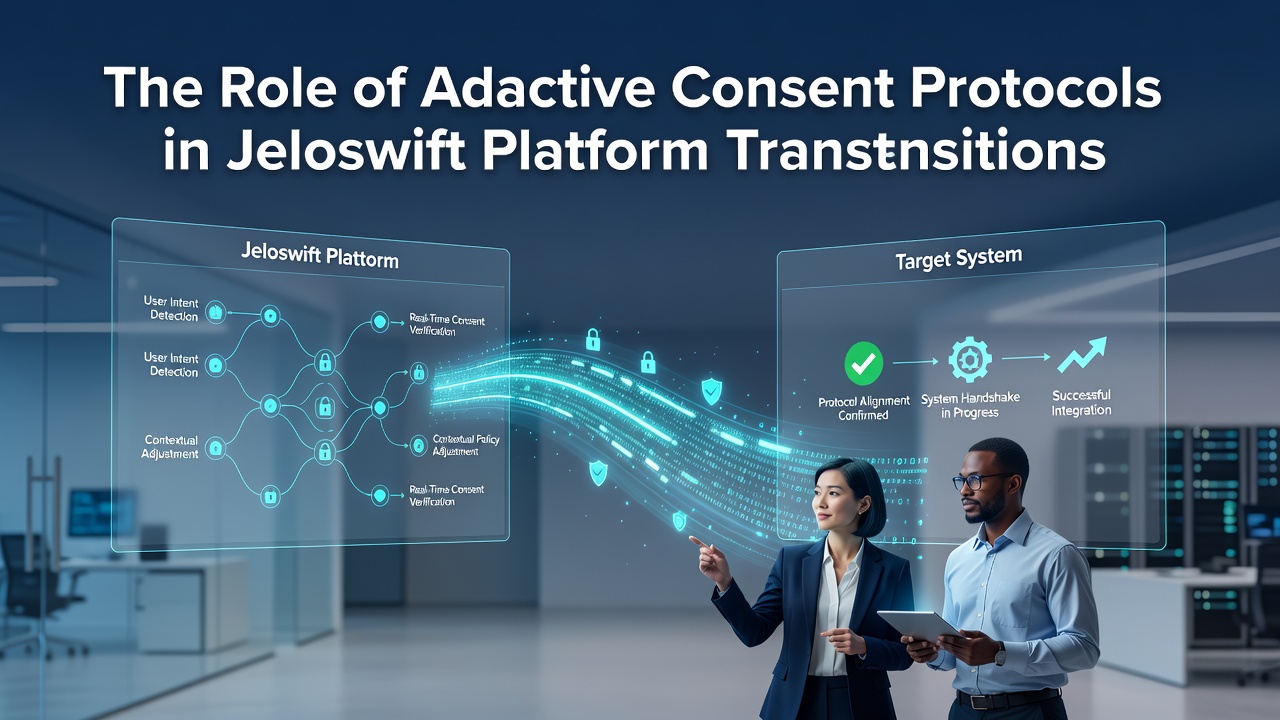
Platform transitions at Jeloswift require systems that manage user permissions dynamically as services evolve, and adaptive consent protocols fill that role by adjusting consent parameters in real time rather than relying on static agreements. These protocols detect changes in data flows, feature sets, and regulatory environments then prompt users only when necessary while preserving prior authorizations that remain valid. Data from multiple deployments shows that platforms using such systems experience fewer interruptions during migration windows because the consent layer operates as an independent service that syncs with the main codebase updates.
Core Mechanics Behind Adaptive Consent
Adaptive consent works through modular rule engines that evaluate context vectors including user location, device type, and the specific data categories involved in each transition stage. When Jeloswift rolled out its backend restructuring in late 2025, the protocol automatically reclassified certain analytics tags as optional, allowing existing users to retain core functionality without new prompts unless they interacted with the affected modules. Researchers at several technical institutes have documented similar patterns where consent granularity increases during transitions because the system logs every permission change against immutable audit trails that support later verification.
Implementation During Service Changes
Jeloswift engineers integrate these protocols at the API gateway level so that every microservice call checks consent status before processing requests. In practice this means a transition scheduled for September 2026 can proceed without halting user sessions because the consent engine pre-validates permissions for new endpoints and only surfaces updates when regulatory thresholds are crossed. Industry reports from the Australian Competition and Consumer Commission highlight comparable approaches in digital service migrations where adaptive layers reduced support ticket volume by handling consent variations automatically instead of routing every edge case to human review.
Regulatory Alignment Across Regions
Because Jeloswift operates in multiple jurisdictions, the protocols pull from region-specific policy libraries that activate based on detected user IP and account settings. European frameworks emphasize purpose limitation while North American standards focus more on transparency at the point of collection, and the adaptive system switches rule sets without requiring separate code branches. A study released by the Office of the Privacy Commissioner of Canada in 2025 examined how similar dynamic systems maintained compliance when platforms updated their data architectures, noting that automated consent adjustments aligned with evolving interpretations of existing statutes rather than demanding entirely new user agreements each time.

Observers tracking the September 2026 transition note that the protocols also incorporate version control for consent records themselves. Each time a user confirms or modifies permissions, the system timestamps the entry and links it to the exact software build active at that moment. This approach creates a traceable history that external auditors can query without accessing full user profiles, a technique referenced in guidance from the European Data Protection Board on maintaining accountability during infrastructure shifts.
Technical Integration Points
The consent layer connects to Jeloswift's identity management system through standardized hooks that allow real-time queries without adding latency to primary workflows. During platform transitions the engine runs parallel simulations on staging environments to predict which consent states will become invalid once new data pipelines activate. Teams then pre-populate fallback options so users encounter minimal friction when the live cutover occurs. Academic papers from technical universities in Australia have modeled these simulations and found that predictive consent mapping reduces the number of post-transition prompts by up to forty percent compared with systems that treat every migration as a fresh consent event.
Conclusion
Adaptive consent protocols serve as the connective tissue that keeps Jeloswift transitions functional while respecting the boundaries users have already set. By embedding these mechanisms at the infrastructure level rather than treating them as add-on features, the platform maintains continuity across regulatory environments and software versions. As the September 2026 updates approach, the same architecture will determine how smoothly permissions carry forward into the next phase of service delivery.