Viktor Peters · 10 September 2026
Shifting Priorities in User Data Handling During Service Migrations Across Evolving Digital Platforms
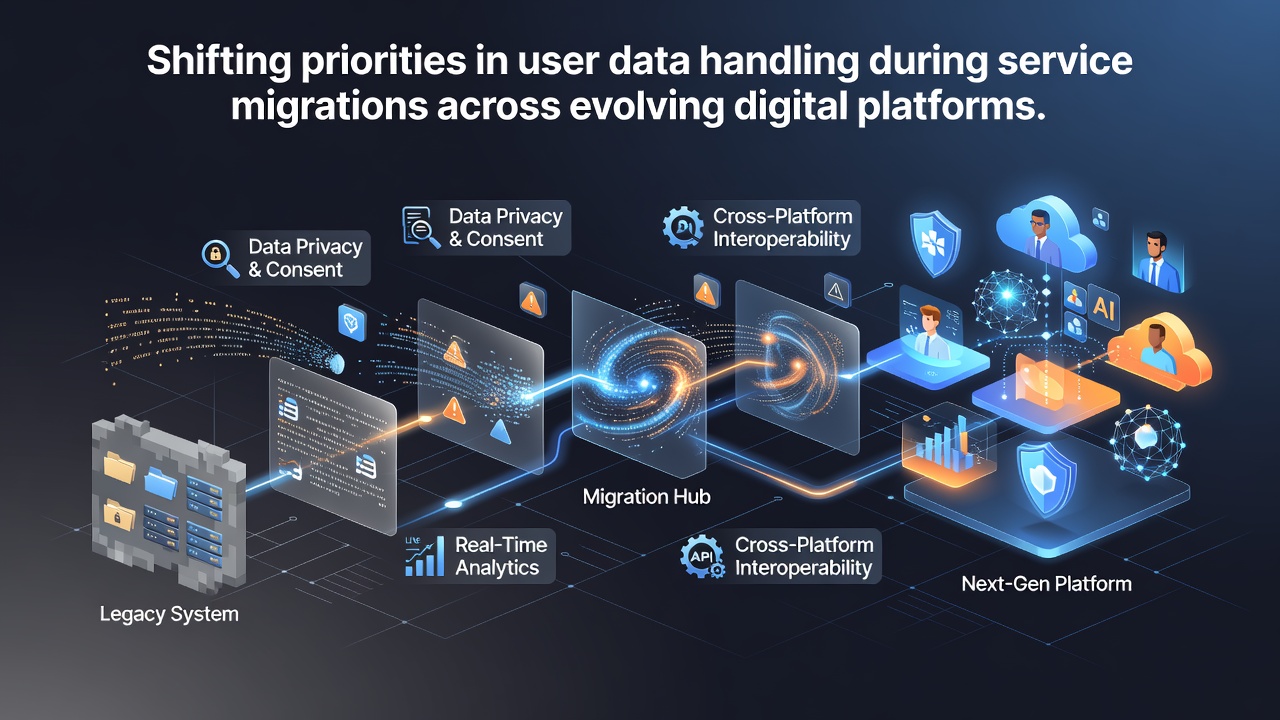
Service migrations across digital platforms have long required careful attention to how user data moves from one system to another, yet recent regulatory developments and technological changes have altered the order of priorities that organizations follow during these transitions. Data portability requirements, consent management protocols, and encryption standards now receive earlier consideration than they did in previous migration cycles, according to reports from multiple regulatory bodies. Organizations handling user information must coordinate transfers while maintaining compliance with frameworks such as the EU General Data Protection Regulation, the California Consumer Privacy Act, and Canada's Personal Information Protection and Electronic Documents Act.
Early Approaches to Data Transfers in Platform Changes
Initial migration projects in the 2010s typically focused first on infrastructure compatibility and uptime guarantees, while data handling steps occurred later in the process. Technical teams concentrated on mapping database schemas and testing API connections before addressing how individual user records would be moved or deleted. This sequence sometimes left consent records incomplete or encryption keys misaligned during the actual transfer window. Observers note that many early projects encountered delays when regulators requested documentation showing that personal data had remained protected throughout the move.
Regulatory Drivers Reshaping Migration Sequences
Updated enforcement priorities from agencies across different regions have prompted organizations to reorder their migration checklists. The Australian Office of the Information Commissioner has issued guidance emphasizing pre-migration data audits, whereas the U.S. Federal Trade Commission has highlighted post-transfer accountability measures. European regulators continue to stress the need for documented lawful bases before any data leaves its original environment. These overlapping expectations mean that legal review now often precedes technical planning rather than following it. September 2026 marks the scheduled review date for several cross-border data adequacy decisions, which analysts expect will further influence how organizations structure future migrations involving personal information.
Consent and Portability Requirements
Modern migration plans incorporate granular consent tracking from the outset. Platforms must verify that each category of data being transferred carries valid permission for the new processing purposes. Data portability features, mandated under several privacy statutes, require organizations to provide users with machine-readable copies before or during the migration window. Teams therefore build export mechanisms and verification logs into the early stages of project timelines. Researchers at academic institutions studying large-scale cloud transitions have documented cases where early integration of these tools reduced the volume of post-migration support requests related to data access.
Security and Encryption Considerations in Current Practice
Encryption key management has moved higher on migration priority lists because platforms increasingly operate across multiple jurisdictions with differing key disclosure rules. Teams now evaluate whether existing keys can be rotated or re-encrypted without service interruption before any data leaves the source environment. Industry reports from research organizations indicate that organizations adopting this sequence experience fewer compliance findings during subsequent audits. The practice also aligns with emerging standards for zero-trust architectures that treat every data movement as a potential exposure point.

Documentation and Audit Trail Expectations
Regulators increasingly request detailed records showing every decision made about data categories, retention periods, and deletion schedules. Project documentation therefore expands to include decision logs, risk assessments, and third-party processor agreements from the planning phase onward. Organizations that maintain these records in searchable formats find it easier to respond to access requests and regulatory inquiries after the migration completes. Data shows that comprehensive audit trails also support internal reviews when new features are introduced on the destination platform.
Cross-Border Transfers and Adequacy Assessments
Many service migrations involve moving data between regions with different legal protections. Organizations must confirm that destination jurisdictions maintain adequate safeguards or implement additional contractual measures before transfers begin. The European Commission's adequacy decisions and similar instruments in other regions provide reference points, yet organizations often supplement these with binding corporate rules or standard contractual clauses. Planning teams now schedule legal sign-off on these instruments earlier in project schedules to avoid bottlenecks during the actual data movement phase.
Conclusion
Shifting priorities in user data handling reflect the combined influence of regulatory updates, technological capabilities, and operational lessons from earlier migrations. Organizations that integrate consent verification, encryption planning, and documentation requirements into initial project phases report smoother transitions and fewer post-migration adjustments. Continued attention to these elements remains necessary as platforms evolve and regulatory expectations continue to develop across jurisdictions.