Amir Otto · 8 October 2026
How Third-Party Tool Integrations Reshape Workflow Automation During Platform Evolutions
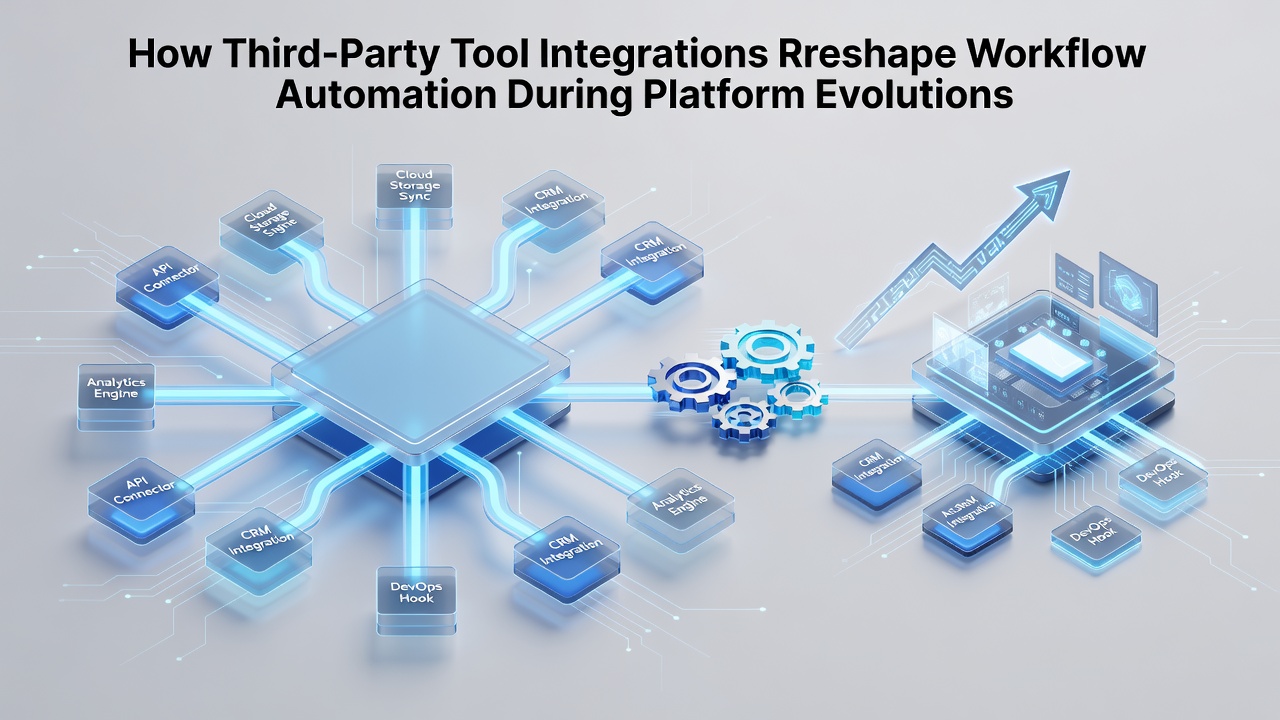
Platform evolutions occur when companies update their core systems to handle new demands in data processing, user scale, or regulatory requirements, and third-party tool integrations often drive the automation changes that follow these updates. Organizations rely on external applications for tasks such as data synchronization, task routing, and reporting, which connect directly to the main platform through APIs and middleware layers. Data from industry reports shows that these connections allow teams to maintain continuity even as underlying infrastructure shifts, because the integrations handle repetitive operations without requiring full rewrites of internal code.
Platform Changes and Their Effect on Existing Workflows
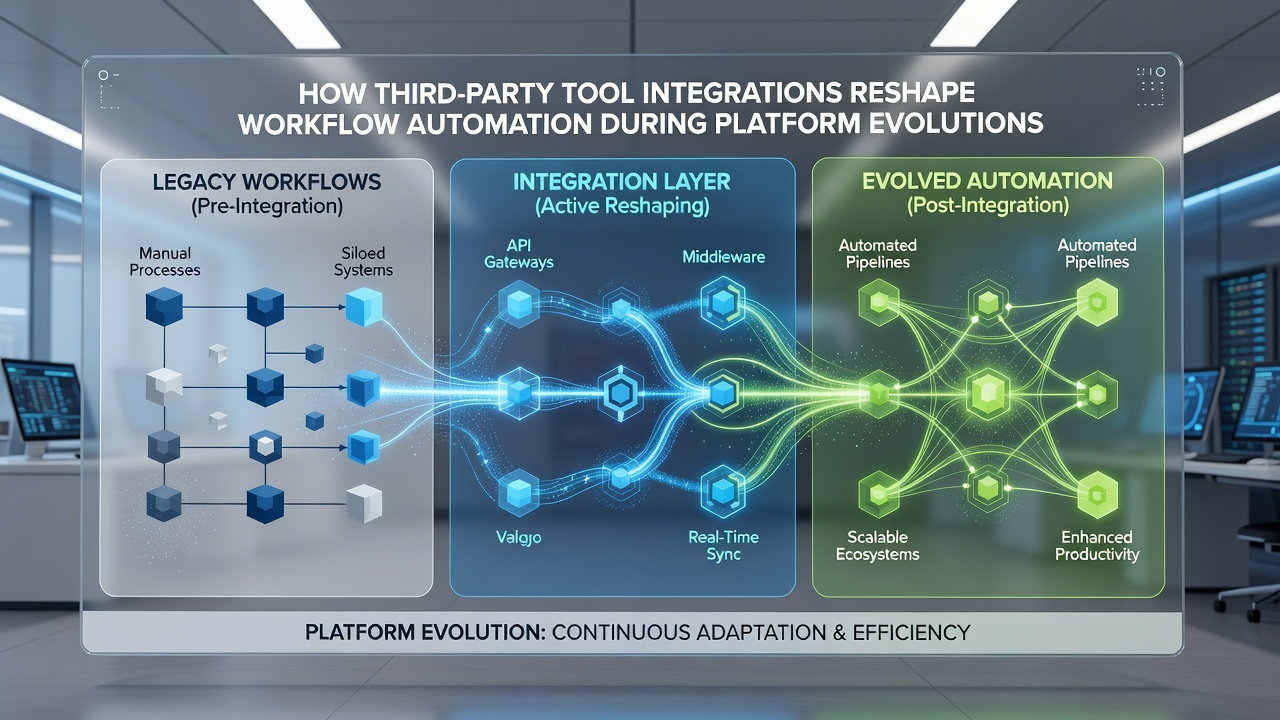
When platforms undergo major updates, legacy automation scripts frequently break due to altered data structures or authentication methods, yet third-party tools step in to bridge those gaps. Researchers at academic institutions have documented cases where companies adopted connector services from vendors like Zapier or Make to reroute data flows automatically during migration periods. These services monitor changes in source systems and trigger actions in destination applications, which reduces the manual intervention that would otherwise slow down operations. In October 2026 several enterprises reported completing platform transitions with minimal downtime after layering such connectors on top of their existing stacks, because the tools absorbed variations in API endpoints without halting business processes.
Integration Patterns That Support Continuous Automation
Experts observe three common patterns when third-party tools enter the picture during evolutions. First, event-driven triggers listen for platform notifications and initiate downstream tasks such as record updates or notification sends. Second, scheduled batch processes pull data at regular intervals and push it into analytics or CRM systems that the core platform no longer supports natively. Third, bidirectional sync mechanisms keep information consistent across multiple applications even while the central platform changes its data model. Government agencies in Australia have published guidance on digital service transitions that highlights the value of these patterns for maintaining compliance records, and similar approaches appear in Canadian public sector documentation on IT modernization.
Real-World Implementation Examples
One logistics firm integrated a third-party workflow platform with its enterprise resource system during a 2025 upgrade cycle, and the connector automatically adjusted shipment tracking entries whenever the main database schema changed. Another example comes from a European research consortium that used middleware to link laboratory management software to updated cloud storage services, which preserved audit trails required under data protection rules. Observers note that these integrations often include built-in error handling and retry logic, features that internal scripts developed years earlier rarely possessed at the same scale.
Security and Compliance Considerations During Transitions
Security teams evaluate third-party connectors for data handling practices before deployment, because platform evolutions frequently coincide with new regulatory expectations. Reports from the European Commission on digital infrastructure emphasize the need for encryption in transit and at rest within any external automation layer. Organizations therefore configure access scopes narrowly so that each integration touches only the data fields required for its function, and they review logs generated by the tools to detect anomalies. Data indicates that companies which performed these reviews early in the evolution process experienced fewer post-migration incidents than those that treated integrations as an afterthought.
Measuring the Impact on Operational Efficiency
Quantitative assessments of automation outcomes after platform changes show reductions in task completion times when third-party tools manage cross-system processes. A study conducted by a North American university tracked workflow metrics across twelve organizations and found that average cycle times for multi-application tasks dropped by measurable percentages once standardized connectors replaced custom scripts. Those same organizations reported that maintenance hours spent on automation decreased because the third-party vendors handled compatibility updates on their own release schedules. Figures reveal that the savings become more pronounced when platforms evolve multiple times within a five-year window, since reusable integrations avoid repeated redevelopment costs.
Conclusion
Third-party tool integrations continue to alter how workflow automation adapts during platform evolutions by providing flexible connectors, event monitoring, and compliance-aware data movement. Evidence from regulatory bodies and research groups demonstrates that these external components help organizations preserve operational continuity while core systems undergo structural updates. As platforms keep evolving, the patterns established through current integrations offer a repeatable foundation for future transitions.